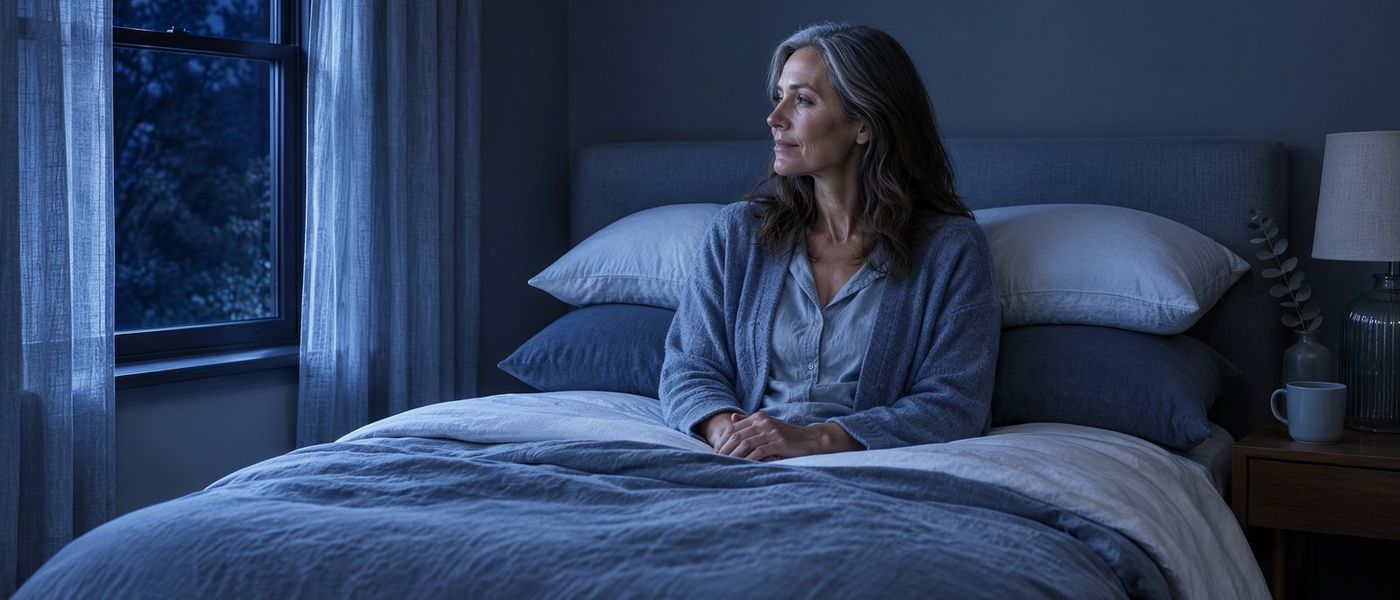
Why Does Sleep Change During Midlife?
If you used to sleep soundly and now wake up at 2 or 3 a.m. and can't drift back off, you're not alone. Sleep problems are one of the most common complaints during perimenopause and menopause, affecting a large share of women in midlife.
What's Disrupting Your Sleep?
- Night sweats: Sudden waves of heat can wake you up repeatedly, sometimes without you noticing why
- Falling progesterone: Progesterone has a calming, sleep-promoting effect. As it declines, sleep can become lighter
- Changing estrogen levels: Estrogen affects body temperature and mood, both of which influence sleep
- Anxiety and racing thoughts: Mood changes during this transition can make it harder to wind down
- Sleep apnea: Risk of sleep apnea rises after menopause, and it often goes undiagnosed in women
- Needing to urinate: Changes in bladder tissue can lead to more nighttime bathroom trips
Simple Habits That Help
- Keep a cool, dark bedroom: A cooler room can reduce night sweats
- Stick to a consistent schedule: Go to bed and wake up at the same time each day
- Limit alcohol and caffeine: Alcohol may help you fall asleep but often causes early waking
- Get morning light: Natural light early in the day supports your body clock
- Move during the day: Regular exercise improves sleep quality
- Try CBT for insomnia (CBT-I): This structured program is considered a first-line treatment for chronic insomnia
Medical Options
If night sweats are the main issue, hormone therapy or non-hormonal medications for hot flashes may improve sleep significantly. If loud snoring, gasping, or daytime sleepiness are present, testing for sleep apnea is important.
When to Get Help
Ongoing poor sleep affects mood, memory, weight, and long-term health. If you've been struggling for weeks, it's worth talking with a provider about what's driving it.
Learn more about provider-guided hormone support here: Heva Hormone Optimization
The Bottom Line
Sleep problems in midlife are common and often tied to hormone changes, night sweats, or sleep apnea. Better habits help, and treating the underlying cause can help you get back to restful nights.